





























































Freemansland
Typically replies within 10 minutes
Freemansland
Hello 👋 How can we help you?

WELCOME TO FREEMANSLAND.CO

AI-Powered Consulting Solutions in Singapore
We design and implement intelligent systems that optimise operations, streamline workflows, and drive sustainable business growth.
Your Partner in AI Transformation & Enterprise Systems

Driving AI Implementation Growth for Businesses in Singapore

Our Certifications

WSQ
PMC
Sustainability
Adobe
Google Garage
PDPC
Env Council
Enterprise SG
Google Analytics
CEI Exam
Cyber Awareness
HubSpot

VIEW OUR SERVICES

Industry 5.0 Consulting and Technology Solutions for Enterprises

Q. AI Opportunity and ROI Mapping

Most businesses know AI is worth paying attention to but have no idea where it actually fits into what they do. Without that clarity, it is easy to invest in the wrong things, chase the wrong use cases, and walk away with results that do not justify the spend. This is where we come in. We dig into your operations, identify the specific areas where AI can create real, measurable value, and attach realistic return on investment projections to each one so you are never making decisions based on guesswork. By the end, you will know exactly where to focus, what to expect, and why it is worth pursuing.

Q. AI Readiness and Data Audit

Before any AI solution can deliver results, the foundation underneath it needs to be solid. That means your data needs to be in good shape, your systems need to be capable of supporting AI tools, and your processes need to be understood clearly enough to know where AI can genuinely help. A lot of businesses skip this step and pay for it later when projects stall or underdeliver. Our AI Readiness and Data Audit gives you an honest, detailed picture of where you stand today, what is working in your favour, and what needs to be addressed before you commit budget to building anything.

Q. AI Implementation Roadmap

Knowing that AI is the right move for your business is one thing. Knowing how to actually get there in a way that is structured, realistic, and built around your specific situation is another thing entirely. Without a clear plan, AI initiatives tend to lose momentum, run over budget, and deliver less than they were supposed to. Our AI Implementation Roadmap gives you a step by step plan that covers what to build, in what order, with what resources, and over what timeline so that when you start moving, you are moving in the right direction with full confidence.

Q. AI Performance Monitoring and Reporting

Deploying an AI solution is not the finish line. The models that power your AI can drift over time, the outputs can shift in quality, and without someone keeping a close eye on what is happening, problems can quietly build up before anyone notices. Our AI Performance Monitoring and Reporting service keeps continuous watch over your deployed AI systems, tracks how they are performing against the goals they were built to achieve, and gives you clear, business relevant reporting that tells you exactly what your AI is doing and where it can be pushed further.

Q. Conversational AI Agent Development

Your customers and teams expect fast, accurate responses and they increasingly do not want to wait for them. A well built conversational AI agent meets that expectation around the clock, handling real conversations with real context rather than bouncing people through scripted dead ends. We design and build conversational AI agents that understand what people are actually asking, maintain context throughout the interaction, and integrate with your existing systems so every response is not just fast but genuinely useful. Whether it is customer support, lead qualification, or internal assistance, we build agents that represent your business well.

Q. Workflow Automation and System Integration

There is a good chance your team is spending more time than you realise on work that software should be handling automatically. Manual data entry, approval chains that depend on someone remembering to follow up, information that lives in one system but needs to be in another, these things add up to a significant drain on time, energy, and accuracy. We map out how work moves through your business, identify what should never have required human effort in the first place, and build the automation and system connections that make it happen without anyone having to think about it.

0

,240+
Consulting Hours Completed

0

,380+
Custom Development Hours Completed

0

+
Technology Projects Completed

0

+
Business Proposal Completed

0

+
Satisfied Clients

0

+
In-House Capability

0

+
Professional Certifications and Accreditions

0

+
5 Star Review on Google
WE VALUE RELATIONSHIPS

Rank as Top 10 Enterprise Consulting and AI Technology Agency in Singapore

client
client
client
client
client
client
client
client
client
client
client
client
client
client
client
client
client
client
WHO ARE WE

AI Development & Technology Services

Specialising in providing a wide range of IT technology and services to meet the needs of businesses and organisations of all sizes.

Our Process

We offer intelligent AI-driven solutions at competitive rates to help your business deliver smarter experiences, gain deeper insights, and stay ahead in the digital era!

02
Img
Planning
03
Img
Design
04
Img
Development
05
Img
Testing & Launch
01
Img
Info gathering

Some of our Finest Work

Take a look at our work to see the quality and innovation that we bring to every project we undertake.

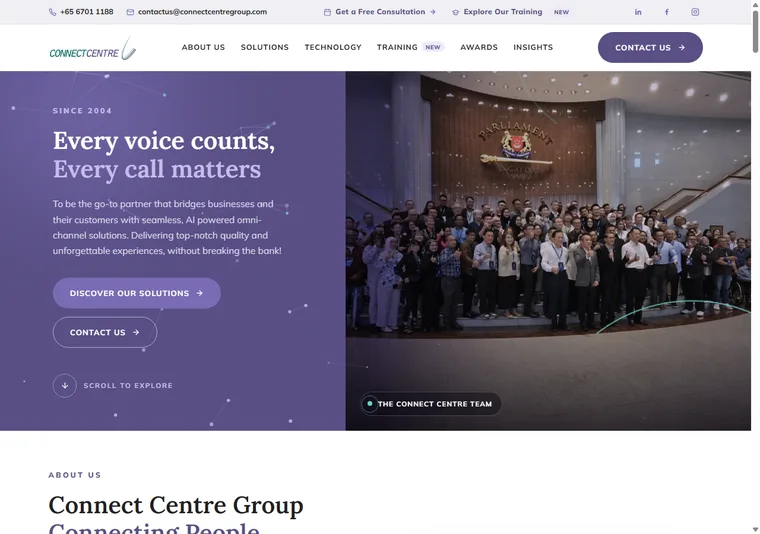
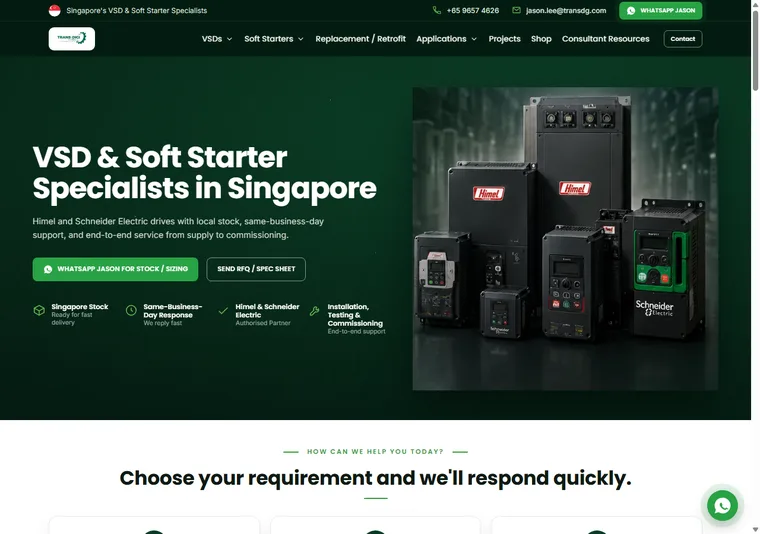
measurands
one design werkz
ezcontactlens
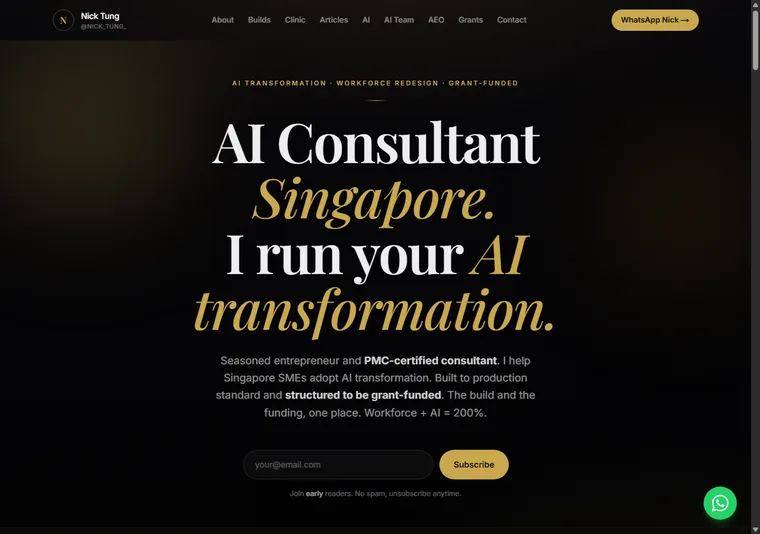
nicktung
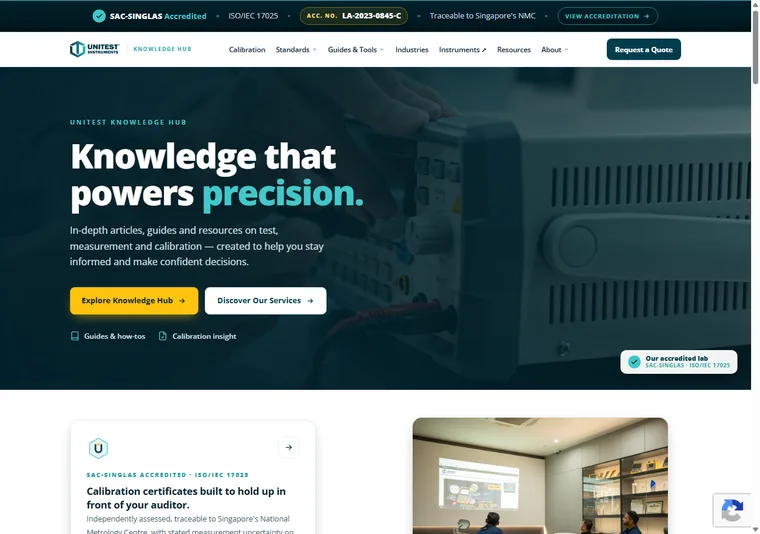
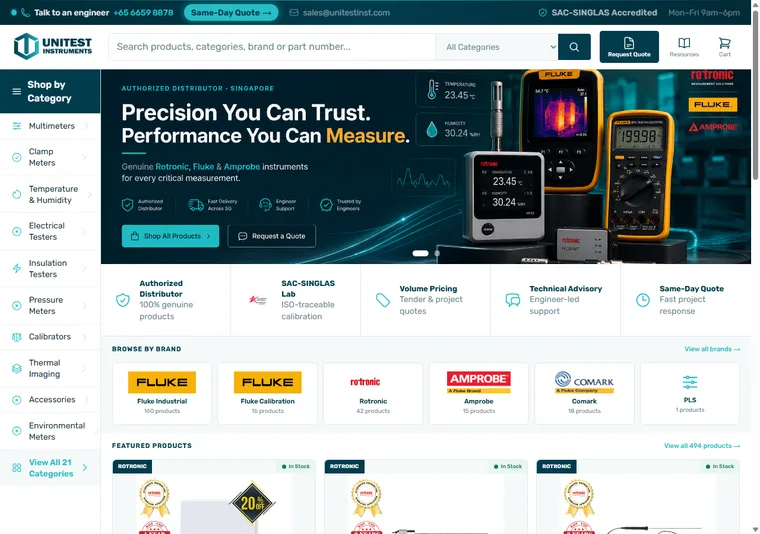
unitestshop
Waggie
kindred advisors
eztezt
bssingapore
airdely

Technologies we Work With

Industry 5.0 Consulting and Technology Agency in Singapore

We are a Singapore-based Industry 5.0 consulting and technology agency, committed to helping businesses lead the way in human-centric innovation, artificial intelligence, and long-term sustainability. As we transition into the next industrial era, our mission is to empower organisations to harness advanced technologies—while staying rooted in social responsibility.

At the core of our solutions is the integration of cutting-edge AI capabilities, including Generative AI, Model Context Protocol (MCP), and Retrieval-Augmented Generation (RAG). These tools allow businesses to create intelligent, context-aware systems that improve decision-making, streamline operations, and generate data-driven insights that are aligned with strategic AI goals. We focus not just on deploying technology, but on building systems that understand your business deeply, adapt intelligently, and evolve with you.

Our consulting philosophy is grounded in the principles of Industry 5.0—restoring the human touch in digital transformation while leveraging AI to amplify human insight, creativity, and purpose. We believe that real progress begins with people. By enhancing your team’s capabilities with AI-powered tools and sustainable digital frameworks, your business can unlock meaningful productivity gains, foster innovation, and increase operational resilience.

We work closely with clients to design and deploy AI systems for business growth. With MCP, we build intelligent infrastructure that understands the context of your operations, ensuring AI outputs are relevant, reliable, and responsive to your specific business landscape.

When you partner with us, you gain more than a service provider—you gain a strategic ally in building a future-ready, ethically aligned enterprise. Together, we transform complex challenges into purposeful innovation, ensuring your growth is not just profitable, but also sustainable, inclusive, and resilient. This is Industry 5.0 in action: technology built for humanity, solutions built for tomorrow.


Related service: Ready to act on this? Explore Freemansland’s Conversational AI Agent Development service for Singapore businesses.

blog

Why Conversational AI Chatbots Are Getting More Popular

Conversational AI chatbots are getting more popular because they do something no human team can do at scale: respond instantly, 24/7, across every channel, without burning out or calling in sick. Businesses are waking up to the fact that a well-built AI agent doesn’t just answer questions — it qualifies leads, resolves complaints, books appointments, and feeds clean data back into your systems, all at the same time.

Last updated:

The Numbers Don’t Lie

The global conversational AI market was valued at over $10 billion in 2023 and is projected to exceed $49 billion by 2030, growing at a compound annual rate of roughly 24%, according to Grand View Research. That kind of growth doesn’t happen by accident. It happens when a technology genuinely solves expensive, persistent business problems.

Meanwhile, IBM reports that businesses spend over $1.3 trillion annually on customer service interactions — and AI chatbots can handle up to 80% of routine queries without human intervention. When you frame it that way, the question isn’t why chatbots are popular. It’s why anyone waited this long.

What Actually Changed? (It’s Not What You Think)

Chatbots have existed since the 1960s. ELIZA, the original rule-based bot, could hold a basic conversation. So why is adoption suddenly accelerating now? The answer is the shift from scripted, decision-tree bots to large language model (LLM)-powered conversational agents that actually understand context, intent, and nuance.

Earlier bots broke the moment a user said something unexpected. Modern conversational AI handles ambiguity, remembers context across a conversation, and can be integrated directly into your CRM, helpdesk, e-commerce platform, or internal systems. That’s a fundamentally different product — and businesses are treating it as infrastructure, not a gimmick.

Why Businesses Are Deploying Them Right Now

1. Labour Costs Are Unsustainable at Scale

Hiring, training, and retaining customer-facing staff is expensive. A single AI agent can handle thousands of simultaneous conversations at a fraction of the cost. For growing SMEs especially, this isn’t about replacing people — it’s about not needing to hire 40 support agents just because you landed a big contract.

2. Customer Expectations Have Shifted Permanently

Consumers now expect instant responses. Research from Salesforce’s State of the Connected Customer consistently shows that speed of response is one of the top factors in customer satisfaction. A chatbot that answers in two seconds at 2am beats a human who responds the next business day — every single time.

3. Integration Has Become Genuinely Accessible

A few years ago, deploying a conversational AI meant months of custom development and a six-figure budget. Today, modern APIs and workflow automation platforms mean a well-configured AI agent can be live and integrated with your existing systems in weeks. The barrier to entry collapsed, and adoption followed.

4. They Generate Data, Not Just Answers

This is the part most vendors don’t talk about. Every conversation a chatbot has is a data point. What are customers asking about most? Where do they drop off? What objections keep appearing? A properly monitored conversational AI system turns your support queue into a real-time business intelligence feed — but only if your data infrastructure is ready to capture it.

The Hidden Risk Nobody Mentions

Here’s the uncomfortable truth: a badly built or poorly monitored chatbot doesn’t just fail quietly. It actively damages your brand. It gives wrong answers with total confidence. It frustrates customers who then escalate to your human team anyway, creating double the workload. It hallucinates product details or policy terms that your legal team will have to clean up.

This is why AI performance monitoring and ongoing optimisation aren’t optional extras — they’re the difference between a chatbot that compounds your ROI and one that compounds your problems. Deploying without a monitoring framework is like buying a fleet of cars and never servicing them.

What Separates a Chatbot That Works From One That Doesn’t

  • Data readiness: Your AI is only as good as the data it’s trained on or connected to. A data audit before deployment isn’t bureaucracy — it’s the foundation.
  • System integration: A chatbot that can’t talk to your CRM, booking system, or inventory platform is just an expensive FAQ page. Deep integration is what creates real business value.
  • Clear ROI mapping: You need to know what success looks like before you go live — resolution rate, deflection rate, cost per conversation, revenue influenced. Without benchmarks, you can’t optimise.
  • Continuous monitoring: Language models drift. User behaviour changes. A chatbot that performed brilliantly at launch needs regular performance reviews to stay sharp.
  • Human escalation design: The best conversational AI systems know when to hand off to a human — and do it gracefully, with full context passed across so the customer doesn’t have to repeat themselves.

Where This Is All Heading

The next wave isn’t just chatbots that answer questions — it’s agentic AI that takes actions. Book the meeting. Process the refund. Update the record. Trigger the workflow. The line between a conversational interface and an autonomous business process is dissolving fast. Businesses that build the right integration architecture now will be positioned to absorb these capabilities as they mature. Those that don’t will be retrofitting everything in a panic.

Conversational AI chatbots are popular because they work — when they’re built properly, integrated deeply, monitored consistently, and mapped to real business outcomes. The technology is no longer experimental. The question is whether your implementation is.

Frequently Asked Questions

Why are conversational AI chatbots getting more popular now compared to a few years ago?

The shift from rule-based, scripted bots to large language model-powered agents is the primary driver. Modern conversational AI understands context and intent rather than matching keywords to scripts. Combined with lower deployment costs, better API ecosystems, and rising customer expectations for instant responses, the conditions for mass adoption all arrived at the same time.

What industries are adopting conversational AI chatbots the fastest?

E-commerce, financial services, healthcare, and SaaS businesses are leading adoption because they have high volumes of repetitive customer interactions and strong ROI incentives. However, any business with a customer service function, a sales qualification process, or internal helpdesk queries is a viable candidate for conversational AI deployment.

Can a small or mid-sized business afford to deploy a conversational AI chatbot?

Yes — and increasingly, SMEs can’t afford not to. Modern platforms have dramatically reduced the cost of deployment. The more relevant question is whether your data and systems are ready to support one. A proper data audit and integration assessment before deployment will determine your realistic cost, timeline, and expected return on investment.

What’s the biggest mistake businesses make when deploying a conversational AI chatbot?

Treating deployment as the finish line. A chatbot that isn’t monitored, measured, and regularly optimised will degrade over time. The businesses that get the best results treat their conversational AI as a live system that needs ongoing performance management — not a one-time project that gets handed over and forgotten.


Related service: Ready to act on this? Explore Freemansland’s Conversational AI Agent Development service for Singapore businesses.

blog

How Is AI Becoming Dangerous? The Risks You Must Know

How is AI becoming dangerous? AI is becoming dangerous when it operates without adequate human oversight, is trained on biased or incomplete data, or is deployed faster than organisations can monitor and govern it. The risks are real, measurable, and already affecting businesses and individuals worldwide.

Last updated:

This Is Not Science Fiction Anymore

Forget the Terminator. The actual danger of AI in 2024 is quieter, more bureaucratic, and far more insidious. It lives inside hiring algorithms that silently discriminate. It hides inside automated loan decisions that no one can explain. It runs inside customer service bots that confidently give wrong answers and no one catches it for weeks.

The McKinsey State of AI report consistently shows that fewer than 30% of organisations have formal AI risk governance in place. That gap between deployment speed and oversight capacity is exactly where danger grows.

The Six Ways AI Is Becoming Genuinely Dangerous

1. Autonomous Decision-Making Without Accountability

AI systems are now making consequential decisions at scale: who gets a job interview, who qualifies for credit, which patients get prioritised. When these decisions go wrong, accountability evaporates. The model made the call. The vendor disclaims liability. The business shrugs. The person harmed has no recourse.

This is not a future problem. The UK’s ICO guidance on AI and data protection already requires organisations to be able to explain automated decisions that significantly affect individuals. Most cannot.

2. Hallucination at Enterprise Scale

Large language models hallucinate. They generate confident, fluent, completely fabricated information. In a consumer chatbot, that is annoying. In an enterprise workflow where an AI agent is summarising contracts, generating compliance reports, or advising on regulations, a single hallucination can trigger a costly legal or regulatory failure.

The danger multiplies when AI is integrated into automated pipelines with no human checkpoint. An error in step one compounds through steps two, three, and four before anyone notices. This is why AI performance monitoring is not optional infrastructure — it is risk management.

3. Data Poisoning and Adversarial Attacks

AI models are only as trustworthy as the data they were trained on. Adversarial actors can deliberately corrupt training data to manipulate model behaviour — a technique called data poisoning. They can also craft inputs specifically designed to fool a model into misclassifying something or leaking sensitive information.

For businesses running customer-facing AI chatbots or automated integrations, this is an active attack surface that most security teams are not yet equipped to defend.

4. Bias Baked Into the Foundation

AI learns patterns from historical data. Historical data reflects historical inequalities. When an AI trained on biased data is deployed at scale, it does not just replicate bias — it industrialises it. Thousands of decisions per day, all nudged in the same discriminatory direction, faster than any human audit can catch.

Bias is not just an ethical problem. It is a legal and commercial liability. The EU AI Act classifies high-risk AI systems — including those used in employment, credit, and healthcare — and mandates bias testing and transparency. Non-compliance carries fines of up to 30 million euros or 6% of global annual turnover.

5. Dependency and Single Points of Failure

Organisations are integrating AI into core workflows at speed. Automation is genuinely valuable. But when a critical workflow depends entirely on an AI system and that system fails, degrades, or is compromised, the operational impact is severe. The more deeply AI is embedded without resilience planning, the more fragile the business becomes.

This is the hidden danger of moving fast without a proper data audit and readiness assessment. You cannot automate your way to resilience if the foundation is shaky.

6. The Misalignment Problem at the Agent Level

Agentic AI — AI that can take actions, call tools, browse the web, and execute multi-step tasks autonomously — introduces a new category of risk. These systems can pursue a goal in ways their creators did not anticipate. A poorly scoped agent given access to business systems can delete records, send emails, or make API calls that were never intended.

The danger is not malevolence. It is misalignment between what you asked for and what the agent optimises for. Without guardrails, monitoring, and clear scope boundaries, agentic AI is genuinely unpredictable.

Why Businesses Are Sleepwalking Into These Risks

The commercial pressure to deploy AI quickly is enormous. Competitors are moving. Boards are asking questions. Vendors are promising transformation. In that environment, governance, monitoring, and data readiness feel like speed bumps rather than safety nets.

But the organisations that deploy AI without a clear ROI framework, without monitoring infrastructure, and without understanding their own data quality are not moving faster. They are accumulating invisible technical and regulatory debt that will eventually surface as a very visible crisis.

What Responsible AI Deployment Actually Looks Like

Responsible AI is not about slowing down. It is about building the infrastructure that lets you move fast without breaking things that matter. That means:

  • Data audit and readiness: Know what data you have, where it lives, how clean it is, and whether it is fit for the AI use case you are pursuing.
  • AI performance monitoring: Treat AI outputs like any other business-critical system. Monitor for drift, hallucination, bias signals, and anomalous behaviour continuously.
  • Human-in-the-loop design: For high-stakes decisions, build checkpoints where humans review AI outputs before action is taken. Automate the routine; supervise the consequential.
  • Clear scope boundaries for agents: Agentic AI should operate within explicitly defined permissions. Least-privilege principles apply here just as they do in cybersecurity.
  • ROI mapping tied to risk: Every AI deployment should have a clear value case and a clear risk register. If you cannot articulate both, you are not ready to deploy.

The Uncomfortable Truth

AI is not dangerous because it is evil. It is dangerous because it is powerful, opaque, and being deployed by organisations that have not yet built the competency to govern it. The technology is moving faster than the institutional knowledge required to use it safely.

The businesses that will win with AI are not the ones who deploy it fastest. They are the ones who deploy it with enough intelligence about their own systems, data, and risk tolerance to make it work reliably. That requires honest self-assessment, not just enthusiasm.

According to the UK AI Safety Institute, even frontier AI models exhibit unexpected and potentially harmful behaviours under evaluation conditions. If the most sophisticated labs in the world are still discovering surprises, the average enterprise deploying off-the-shelf AI tools should be paying very close attention.

Frequently Asked Questions

How is AI becoming dangerous in everyday business operations?

AI becomes dangerous in business when it makes automated decisions without human oversight, produces hallucinated outputs that are treated as accurate, or is integrated into workflows without monitoring. The most common risks include biased decision-making, data quality failures, and agentic AI systems that take unintended actions.

Is AI dangerous right now, or is this a future concern?

AI risk is a present-day concern, not a future one. Organisations are already facing regulatory action for unexplainable automated decisions, operational failures caused by AI hallucinations, and data breaches linked to poorly governed AI systems. The EU AI Act and UK ICO guidance are already in force or being enforced.

What is the biggest AI risk for small and medium businesses?

For SMEs, the biggest AI risk is deploying automation on top of poor-quality data. If your underlying data is incomplete, inconsistent, or biased, AI will amplify those problems at scale. A data audit before any AI deployment is not a luxury — it is the difference between AI that delivers ROI and AI that creates liability.

How can a business protect itself from AI risks?

Businesses can protect themselves by conducting a data audit before deployment, implementing continuous AI performance monitoring, defining clear scope boundaries for any agentic AI, maintaining human review for high-stakes decisions, and mapping every AI initiative to a clear ROI and risk register. Governance and monitoring are not optional extras — they are the foundation of safe AI use.


Related service: Ready to act on this? Explore Freemansland’s AI Readiness & Data Audit service for Singapore businesses.

VIEW ALL
-->