
Full Automation Is a Trap: The Case for Humans in the Loop
- ByClara Tung
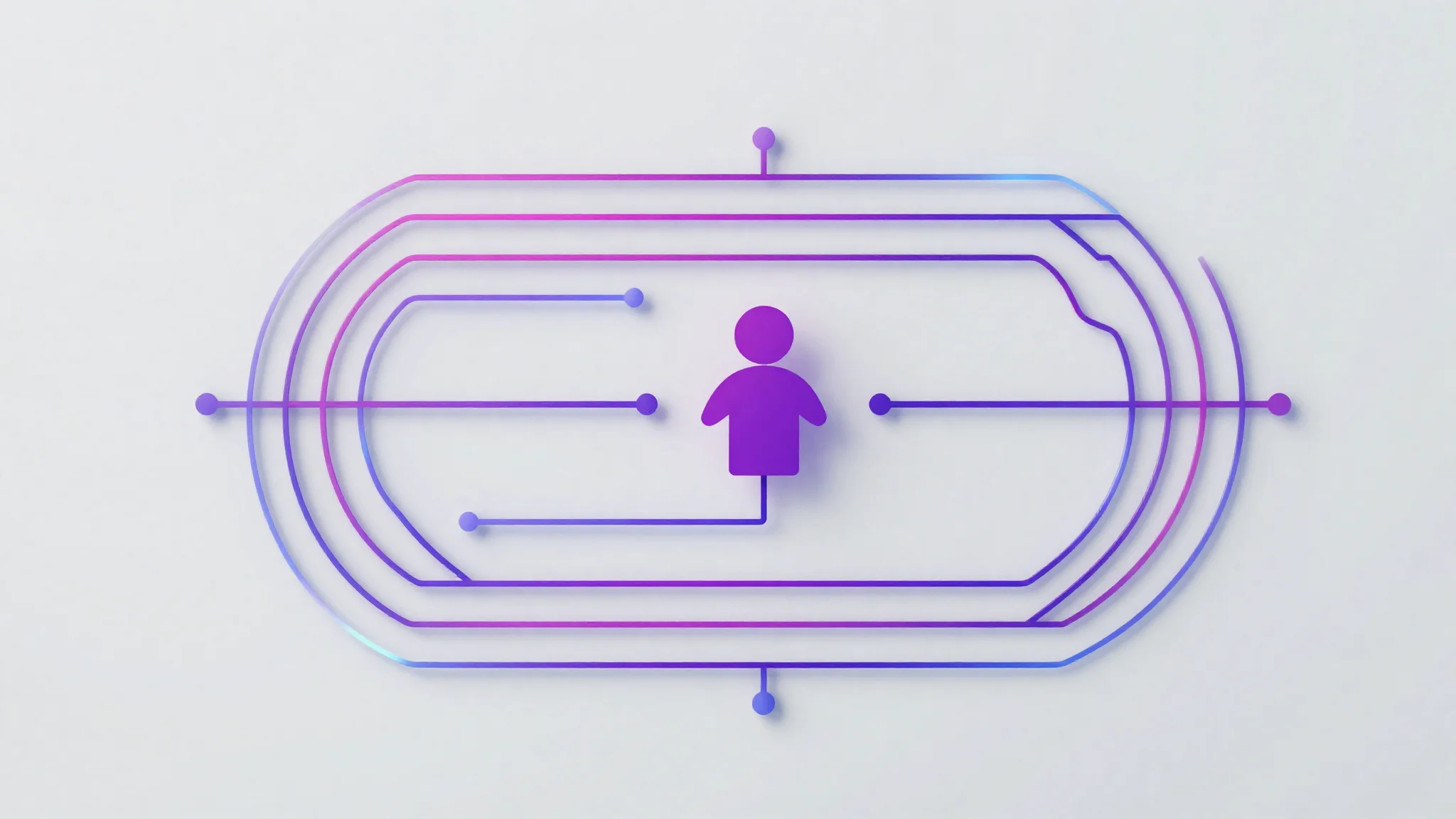
Full automation sounds like the finish line. No people, no delays, no payroll, just a system that runs itself. It is a compelling pitch, and for many processes it is the wrong goal. The case for keeping humans in the loop is not nostalgia or caution for its own sake. It is a practical design choice that makes workflow automation and system integration safer, more trusted, and often more valuable than a fully hands-off system.
Is full automation always the right target? No. For high-stakes, ambiguous, or trust-sensitive work, the best design keeps a human at the decision point while automation does the heavy lifting around them. Chasing one hundred percent automation in those cases trades away safety and accountability for a number that looks good on a slide.
The seduction of removing the human
Every human step in a process is a cost and a bottleneck. It is tempting to view people as the inefficiency to engineer out. And for genuinely routine work, that is fair. Nobody should manually copy numbers between spreadsheets in 2026.
But the human in many processes is not there because of inefficiency. They are there because the work needs judgment, accountability, or the ability to catch the strange case that no rule anticipated. Remove them and you do not just remove a cost. You remove a safeguard.
Where full automation quietly fails
The failure modes of over-automation are consistent, and they tend to appear only after the system has been trusted for a while. That delay is what makes them dangerous.
- The confident wrong answer. AI is probabilistic, so it will occasionally be wrong with total confidence, and a fully automated system will act on that error before anyone sees it.
- The unseen edge case. Real business throws up situations no rule covered, and a system with no human has no way to pause and ask.
- The erosion of trust. One visible automated mistake with a customer can undo months of goodwill, and there was no human in the path to prevent it.
- The accountability gap. When something goes wrong and no person was involved, nobody can explain the decision or own the fix.
None of these mean automation is bad. They mean that removing the human entirely, in the wrong place, converts a manageable risk into an invisible one.
Humans in the loop is a design, not a compromise
Keeping a person in the loop does not mean going slow or automating nothing. It means designing the system so that automation handles volume and speed while a human handles judgment and exceptions. The machine does ninety percent of the work and surfaces the ten percent that needs a decision.
A well-designed loop makes the human faster, not redundant. Instead of doing the whole task, they review a recommendation, approve or correct it, and move on. The automation drafts, the human decides. That division plays to the strength of each.
Where to put the human
The skill is placing the human at the right point rather than everywhere or nowhere. A few reliable principles help. Keep a person on any step where a mistake is expensive, irreversible, or public. Let automation run freely where errors are cheap and easy to catch. And always give the system a way to escalate the case it is unsure about, rather than forcing a guess.
This is a core part of thoughtful workflow automation and system integration. The integration decides not just how data flows, but where a human gets to intervene, what they see when they do, and how cleanly the system hands control back and forth.
The confidence threshold approach
A practical pattern is to let the automation act on its own when it is highly confident and route to a human when it is not. An AI that is ninety-nine percent sure how to categorise a routine request can proceed. The same AI faced with an ambiguous, unusual, or high-value case should hand it to a person.
This gives you most of the efficiency of full automation on the easy majority of cases, while protecting the hard minority where errors do real damage. It is a far better target than blanket automation, and it scales gracefully as the system earns more trust over time.
When full automation genuinely is the right call
To be fair, there are processes where removing the human completely is correct. Low-stakes, high-volume, well-understood tasks with cheap and reversible errors are ideal for hands-off automation. Sending a routine confirmation, moving a file, updating a status: automate these fully and never look back.
The point is not that humans must always be involved. It is that the level of automation should match the stakes of the work, not the ambition of the pitch. Match it well and you get speed where speed is safe and judgment where judgment matters.
Trust is built slowly and lost instantly
There is an asymmetry that over-automation ignores. Trust in a system accumulates slowly, through months of quiet, correct behaviour, and it collapses in a single visible failure. A fully automated process that handles a thousand cases perfectly and then sends a wrong, offensive, or costly output to a customer has not earned a reputation for reliability. It has earned a story that people repeat. A human in the loop at the sensitive point is cheap insurance against the one failure that undoes all the silent successes.
The loop should tighten as the system earns trust
Humans in the loop is not a fixed state. It is a starting position that should evolve. Early on, a person might review most of what the system produces. As the evidence accumulates and the error rate proves low, you widen the band of cases the system handles alone and narrow the human review to the genuinely hard ones. The loop tightens gradually, guided by data rather than optimism. This is how you reach a high level of automation safely, by earning it rather than assuming it on day one.
Questions leadership should ask before removing a person
Before signing off on full automation for any consequential process, a leader should ask a few blunt questions. What is the worst thing that happens if the system is confidently wrong? Would we know, and how quickly? Who is accountable when there is no human in the path? Can the customer tell they are dealing with a machine, and do we mind if they can? If the honest answers make you uneasy, that is the signal to keep a person in the loop, at least until the evidence says otherwise.
Automation and judgment are not rivals
The framing of humans against machines is unhelpful. The strongest systems are partnerships, where the machine contributes tireless speed and consistency and the person contributes judgment, empathy, and accountability. Designed well, each covers the other's weakness. The aim is not to minimise the human. It is to place human attention exactly where it earns its keep and let automation carry everything else.
The bottom line
Full automation is a trap when it is treated as the goal rather than a tool. For high-stakes, ambiguous, or trust-sensitive work, keeping a human in the loop is a deliberate design that protects against confident errors, unseen edge cases, and the accountability gap. Automate the routine fully, keep a person on the consequential, and use confidence thresholds to route between them. The right amount of automation is the amount the risk can bear, not the maximum you can reach.
Not sure where automation actually pays off in your business? Freemansland has delivered 670+ technology projects for 500+ clients since 2022, and we run a free AI opportunity assessment that gives you an honest read: where AI and automation can help, where they cannot, and what it would take. Book your free AI opportunity assessment and we will come back within one working day.
Frequently Asked Questions
Is full automation ever the right goal?
Yes, for low-stakes, high-volume, well-understood tasks where errors are cheap and reversible, such as sending routine confirmations or updating a status. The problem is applying full automation to high-stakes, ambiguous, or trust-sensitive work, where removing the human removes a necessary safeguard rather than just a cost.
What does humans in the loop actually mean?
It means designing the system so automation handles the volume and speed while a person handles judgment and exceptions. The machine does most of the work and surfaces the small share of cases that need a decision. The human reviews, approves, or corrects rather than doing the whole task manually.
How do I decide where to keep a human involved?
Keep a person on any step where a mistake is expensive, irreversible, or public. Let automation run freely where errors are cheap and easy to catch. A confidence threshold works well: the system acts alone when highly certain and escalates to a human when it is not.
Does keeping humans in the loop cancel out the benefits of automation?
No. A well-designed loop still automates the easy majority of cases and only routes the difficult minority to a person. You capture most of the efficiency while protecting the cases where an error would do real damage, which usually produces a more trusted and durable system.
Get a Free Consultation
Free AI Opportunity Assessment
Find out where AI actually pays off in your business
Tell us what your business does and where the bottlenecks are. We will come back with an honest read: where AI can help, where it cannot, and what it would take.
- Response within one working day
- Plain-English advice, no jargon and no obligation
- Grant guidance included where your project may qualify
Talk to a consultant
Or WhatsApp us directly at +65 9184 9908